Medical and Healthcare Building Roofing in Huntsville, AL — What to Expect
Healthcare buildings impose constraints no other commercial building does. Odor and airborne particulate from roofing work can be drawn into an air handling system and distributed through clinical space, so intake isolation, temporary sealing and coordination with facilities engineering are part of the job rather than a courtesy. On buildings with sensitive areas, roofing work is normally planned jointly with infection control rather than notified to them.
Vibration is the second constraint, and the one most often underestimated. Imaging equipment, laboratory instruments and some procedure rooms are sensitive to vibration that would be unremarkable in an office building. Mechanical fastening directly above such a space may need to be rescheduled, relocated or replaced with an adhered assembly, and that has to be established before a system is specified rather than discovered during installation.
The third is that these buildings do not close. Clinical operations run continuously, and a leak into a treatment area, a pharmacy or a records room carries consequences well beyond the repair cost. That combination pushes healthcare facilities toward scheduled condition assessment and preventive maintenance more strongly than almost any other building type on this site.
What Is Included
- Air intake isolation and odor control coordinated with facilities engineering
- Vibration-sensitive areas identified before fastening method is chosen
- Adhered assemblies where mechanical fastening is not acceptable
- Work planned jointly with infection control where required
- Continuous-operation phasing with no clinical area left exposed
- Documented condition assessment for capital planning
The Medical and Healthcare Building Roofing Process
- 1
Step 1: Coordinate with Facilities and Infection Control
Air intakes, sensitive areas and any clinical restrictions are identified with the facilities team before scope is set. On a healthcare building that precedes the roof survey rather than following it.
- 2
Step 2: Identify Vibration-Sensitive Space
Imaging, laboratory and procedure areas are mapped so fastening method above them is decided deliberately, with adhered assemblies used where mechanical fastening is not acceptable.
- 3
Step 3: Isolate Intakes and Control Odor
Intakes near the work area are temporarily isolated or sealed in coordination with the facilities team, and low-odor methods are used wherever doubt exists.
- 4
Step 4: Phase Around Clinical Operation
Sections sized and scheduled so no clinical area is exposed and no service is interrupted, with each closed watertight before the crew leaves.
Types of Medical and Healthcare Building Roofing in Huntsville
Medical Office Building Roofing
Roofing for clinics and consulting suites operating continuously through the work.
Low-Odor and Adhered Systems
Assemblies selected to avoid odor ingress and vibration above sensitive clinical space.
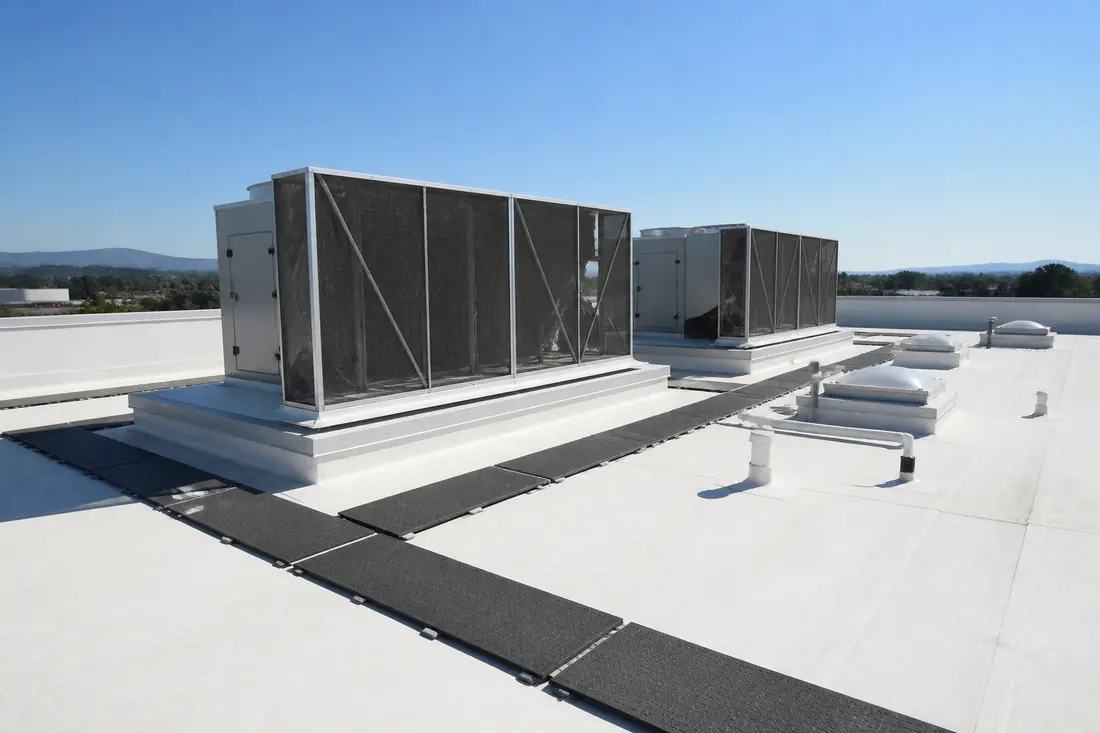
Rooftop Air Handling Detailing
Curb, duct and intake detailing around the large mechanical plant these buildings carry.
Healthcare Facility Maintenance Programs
Scheduled assessment and preventive repair, where the cost of a leak is measured in disrupted care rather than damaged finishes.
What Matters When Choosing a Commercial Buildings Contractor in Huntsville, AL
We work around your operations
Occupied buildings do not stop for a roof. Phasing, night and weekend work, and protection of what is underneath are planned before mobilisation, not improvised on day one.
Drainage assessed before membrane
Most premature membrane failure we are called to is a drainage problem wearing a membrane costume. Slope, drains and scuppers get surveyed before anyone specifies a system.
Written scope, photographed condition
You get a documented scope and photographs of what was found and what was done, which is what a facility manager needs for a capital file and an insurer needs for a claim.
Installed to manufacturer specification
Fastener patterns, seam widths and flashing details follow the system manufacturer’s published requirements, because that is what a material warranty is conditioned on.
Repair quoted against replacement
When a roof is near end of life we price the repair and the replacement side by side with remaining service life on each, rather than selling whichever is larger.
Clean sites, protected tenants
Debris containment, magnet sweeps and protected walkways matter more on an occupied retail or medical building than on any residential job.
Medical and Healthcare Building Roofing FAQs
Can roofing odor get into the building?
It can, through rooftop air intakes, which is why intake isolation is planned with the facilities team before work starts rather than managed reactively. Where there is any doubt, low-odor methods are used. On buildings with sensitive clinical areas this is normally coordinated with infection control as a matter of course.
Will the work affect our imaging or laboratory equipment?
It can, if mechanical fastening happens directly above vibration-sensitive space, and that is worth establishing before a system is specified. Where fastening is not acceptable above a particular area, an adhered assembly is the usual answer. Mapping those areas early is what avoids the problem.
Do we have to close any part of the facility?
Normally no. Work is phased so no clinical area is exposed and each section closes watertight the same day. Specific short interruptions, such as isolating an air intake, are agreed in advance with facilities rather than arranged on the day.
Why do healthcare buildings need a maintenance program more than others?
Because the consequence of a leak is disproportionate. Water into a treatment area, pharmacy or records store disrupts care and creates problems well beyond the cost of the repair. Scheduled assessment catches the failure while it is still a roofing issue rather than a clinical one.
Other Services in Huntsville
- Office and Professional Building RoofingRoofing for occupied office buildings, where noise, odor and tenant disruption are constraints on the work rather than afterthoughts.
- Industrial and Manufacturing RoofingRoofing for manufacturing and process facilities, where exhaust, heat and continuous operation dictate the membrane as much as the weather does.
- TPO RoofingHeat-welded TPO single-ply membrane — the reflective white system most new North Alabama commercial roofs are built with.