Industrial and Manufacturing Roofing in Huntsville, AL — What to Expect
What separates an industrial roof from any other commercial roof is what the building emits. Process exhaust, cooking oils, solvents, plasticizers and animal fats all attack roofing membranes, and they attack different membranes differently. A membrane that performs well in a business park can degrade quickly downwind of a process stack. Chemical compatibility is a genuine specification question on these buildings rather than a formality, and it is the question most often skipped.
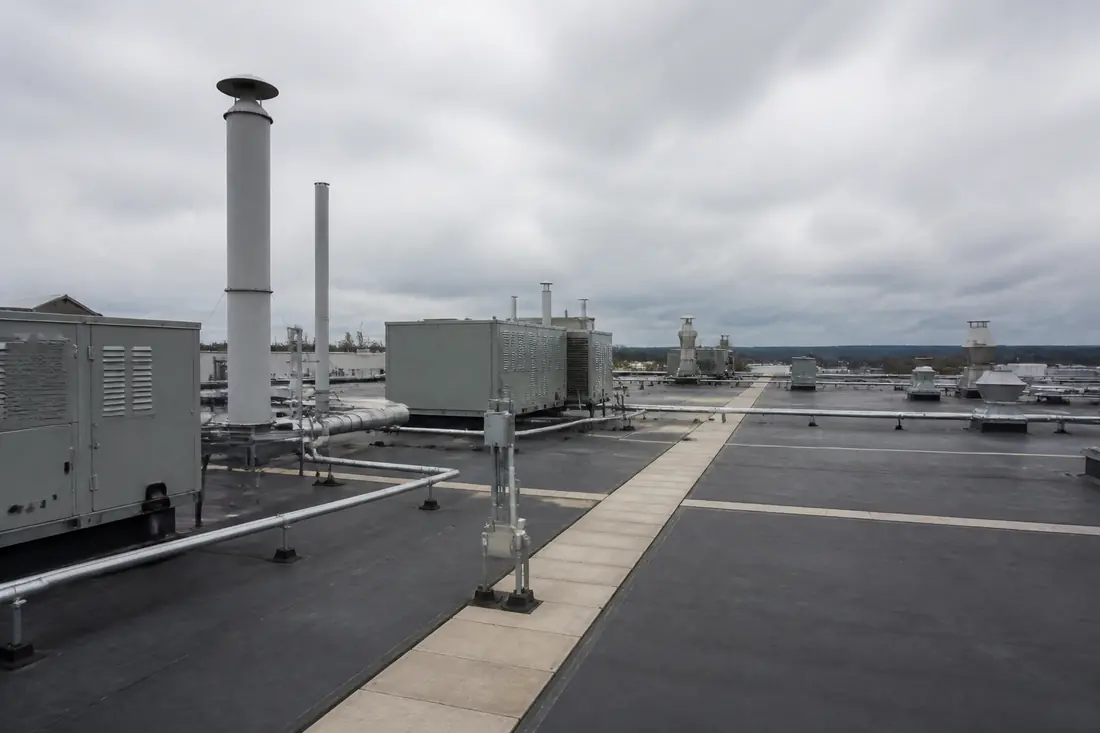
Heat is the second constraint. Manufacturing roofs carry more rooftop equipment, more exhaust and often significantly higher deck-side temperatures than a comparable commercial building. That affects insulation choice, fastener performance and the rate at which a membrane ages. It also concentrates foot traffic, because equipment that runs continuously gets serviced continuously.
The third is that the plant does not stop. Production schedules rarely leave convenient windows, and work often has to happen in shift changes, planned shutdowns, or over sections that can be isolated. That constrains sequencing far more tightly than on most commercial jobs, and it is the part worth planning first.
What Is Included
- Membrane selected for chemical compatibility with what the building emits
- Detailing around process stacks, exhaust and high-temperature penetrations
- Walkway protection where equipment is serviced continuously
- Work phased into shift changes and planned shutdown windows
- Assemblies specified for elevated deck-side temperatures
- Isolation of work areas from production space below
The Industrial and Manufacturing Roofing Process
- 1
Step 1: Identify What the Roof Is Exposed To
Process exhaust, oils, solvents and discharge temperatures are established before a membrane is proposed, because chemical attack is the failure mode that separates this building type from every other.
- 2
Step 2: Agree the Production Window
Shift patterns, shutdown dates and which areas can be isolated determine the sequence. On a manufacturing roof the schedule is the hardest constraint on the job.
- 3
Step 3: Detail the Penetrations
Stacks, high-temperature vents and equipment curbs are where these roofs leak. Each is detailed individually rather than to a standard, with materials rated for the temperatures involved.
- 4
Step 4: Protect the Service Routes
Walkway protection is installed where technicians actually walk, which is usually visible in the wear pattern on the existing roof rather than on any drawing.
Types of Industrial and Manufacturing Roofing in Huntsville
Manufacturing Facility Roofing
Roofing for production buildings where exhaust, heat and continuous operation drive the specification.
Chemical-Resistant Membrane Systems
Membranes selected for compatibility with the oils, solvents and process discharge a specific building produces.
High-Temperature Penetration Detailing
Stack, flue and equipment curb detailing rated for the discharge temperatures present.
Shutdown-Window Replacement
Full or sectional replacement scheduled into planned plant shutdowns rather than around them.
What Matters When Choosing a Commercial Buildings Contractor in Huntsville, AL
We work around your operations
Occupied buildings do not stop for a roof. Phasing, night and weekend work, and protection of what is underneath are planned before mobilisation, not improvised on day one.
Drainage assessed before membrane
Most premature membrane failure we are called to is a drainage problem wearing a membrane costume. Slope, drains and scuppers get surveyed before anyone specifies a system.
Written scope, photographed condition
You get a documented scope and photographs of what was found and what was done, which is what a facility manager needs for a capital file and an insurer needs for a claim.
Installed to manufacturer specification
Fastener patterns, seam widths and flashing details follow the system manufacturer’s published requirements, because that is what a material warranty is conditioned on.
Repair quoted against replacement
When a roof is near end of life we price the repair and the replacement side by side with remaining service life on each, rather than selling whichever is larger.
Clean sites, protected tenants
Debris containment, magnet sweeps and protected walkways matter more on an occupied retail or medical building than on any residential job.
Industrial and Manufacturing Roofing FAQs
Does process exhaust really damage a roof membrane?
Yes, and it is the most commonly missed specification issue on industrial buildings. Oils, solvents, animal fats and some process discharges degrade certain membranes and leave others largely unaffected. Which membrane suits a building depends on what that building emits, so it is worth establishing before a system is chosen rather than after it fails downwind of a stack.
Can the work happen without stopping production?
Usually, though it constrains the schedule more than on other commercial buildings. Work is sequenced into shift changes, weekends or planned shutdowns, and areas that can be isolated from the production space below are taken first. The production calendar is normally the first thing to agree.
Why does our roof wear out faster than the building next door?
On a manufacturing building the usual answers are chemical exposure, elevated deck-side temperature and foot traffic from continuous equipment servicing. All three age a membrane faster than weather alone, and all three are addressable in the next specification.
Do we need walkway pads?
If equipment on the roof is serviced regularly, almost certainly. Foot traffic concentrated on the same routes is a common cause of membrane damage on industrial roofs, and the wear pattern on the existing roof usually shows exactly where the pads belong.
Other Services in Huntsville
- Medical and Healthcare Building RoofingRoofing for clinics, surgeries and healthcare facilities, where infection control, air handling and continuous operation govern how the work is done.
- PVC RoofingHeat-welded PVC membrane for buildings that exhaust grease, oils or chemicals — restaurants, food processing and manufacturing.
- Modified Bitumen RoofingMulti-ply modified bitumen systems for roofs that take foot traffic, rooftop equipment and regular servicing.